
Beyond the Desk: Wellness and Work-Life Balance in Coworking Spaces
The global corporate wellness market is projected to grow from approximately $57.18 billion in 2023 to nearly $109.71 billion by 2031, according to Allwork.Space’s analysis of workplace wellbeing trends. That doubling is not a coincidence. It reflects how seriously businesses now treat employee wellbeing as a driver of performance, retention, and long-term cost management.
Coworking spaces sit at the center of this shift. As more professionals split their time between home, headquarters, and shared workspaces, the workspaces they choose increasingly shape their daily wellness habits. This article explores how modern coworking environments support physical health, mental clarity, and work-life balance, and what to look for when choosing a space that genuinely delivers on these promises rather than treating wellness as a marketing line.
Why Wellness Has Moved to the Center of Workspace Decisions
Remote and hybrid work have blurred the boundaries between professional and personal lives, contributing to rising rates of burnout and stress. A February 2025 study published in Ergonomics, which tracked remote workers using the Experience Sampling Method, found that working from a coworking space produced higher wellbeing, productivity, and work engagement than working from home.
That is a meaningful finding. It suggests that the right shared environment can actively counteract the isolation and routine erosion that come with long-term remote work. The structured environment, the separation between work and personal space, and the social presence of other professionals all contribute to this effect.
Coworking has evolved from a place to access Wi-Fi and a desk into a deliberate setting that supports the daily routines of focused work, recovery, and connection. For professionals choosing where to spend their workdays, that distinction matters.
Biophilic Design and Indoor Environment Quality
The physical environment of a workspace has direct, measurable effects on health and performance. The World Green Building Council has documented that air quality, lighting, views of nature, and interior layout significantly affect the health, satisfaction, and job performance of office workers, with better indoor air quality alone linked to productivity gains of 8 to 11%.
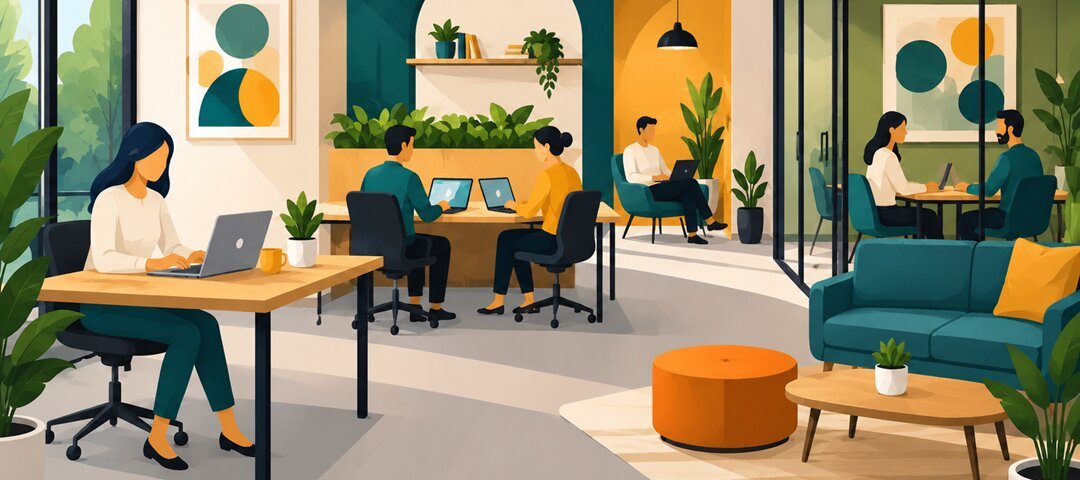
Modern coworking spaces translate this research into practical design. Biophilic features such as indoor plants, living walls, natural materials, and maximized daylight reduce stress while supporting circadian rhythms. Good ventilation systems lower CO2 levels that otherwise accumulate in dense workspaces and contribute to afternoon fatigue. Acoustic zoning protects focus and reduces the nervous system overload that comes from constant ambient noise.
When evaluating a coworking space for rent, ask about air quality monitoring, natural lighting access, and whether the design includes dedicated quiet zones. These details are often the difference between a workspace that supports wellness and one that simply claims to.
Ergonomics That Protect Long-Term Physical Health
Sitting at a poorly designed workstation for 40 or more hours a week creates cumulative damage. Back pain, neck strain, wrist injuries, and eye fatigue are common consequences of working from improvised home setups or generic office furniture. These issues reduce concentration, increase sick days, and contribute to longer-term health problems.
Professional cowork spaces address this through ergonomic furniture as a standard offering rather than a premium upgrade. Adjustable-height desks, chairs with proper lumbar support, monitor arms that allow correct screen positioning, and ample task lighting all reduce the physical strain of long workdays.
For freelancers and remote workers who previously worked from couches, kitchen tables, or small home desks, the shift to a properly equipped workstation can be a measurable upgrade to daily quality of life. A boutique office in Greater Noida or similar curated environment offers this standard of ergonomics without requiring you to invest in expensive furniture yourself.
Dedicated Wellness Zones and Programming
The most advanced coworking spaces go beyond passive design and offer active wellness infrastructure. This can include meditation rooms, fitness areas, yoga studios, nap pods, healthy food options in cafes, lactation spaces, and shower facilities for members who exercise during the day.
Programming also matters. Spaces that host regular wellness sessions, mental health workshops, nutrition talks, or community fitness events create habits that extend beyond the workspace. These offerings are most effective when they are integrated into the daily rhythm of the space rather than scheduled as occasional novelty events.
That said, not every coworking space delivers wellness with the consistency it advertises. Many operators confuse wellness with isolated gestures like an occasional yoga class. Effective wellbeing initiatives require dedicated infrastructure and consistent programming, not symbolic offerings. Before committing, visit the space, observe how the wellness areas are actually used, and ask members about their experience.
Community and Social Connection Reduce Isolation
One of the underrated wellness benefits of a coworking space is the simple presence of other professionals. Remote work, despite its flexibility, often leads to social isolation that affects mental health, motivation, and long-term job satisfaction. Coworking spaces restore that daily social context without requiring full-time office attendance.
Casual interactions in shared kitchens, informal collaborations in lounge areas, member events, and community programming all create the kind of low-friction social engagement that supports mental health. For freelancers, founders, and solo professionals especially, this human connection can be as valuable as any productivity gain.
Spaces that invest in community managers, organize regular member events, and host conference room sessions for workshops and gatherings tend to deliver stronger community outcomes than those that rely on members to organize themselves. When evaluating a workspace, ask what community programming the operator runs and how active the member base is.
Supporting Work-Life Balance Through Spatial and Temporal Boundaries
Work-life balance is not just about hours worked. It is about the boundary between work mode and personal mode, which is harder to maintain when both happen in the same physical space. Coworking spaces provide a clear spatial boundary that home-based work cannot replicate.
When you commute to a workspace, settle into your chair, and complete a focused workday, the act of leaving the space at the end of the day reinforces that work has ended. That psychological separation is one of the most effective tools for protecting evenings, weekends, and personal time from work creep.
Many coworking spaces also offer flexible access hours, so professionals can work early or late when needed without disrupting household routines. For businesses that need a professional address without requiring daily desk access, a virtual office solution combined with occasional in-person use provides another layer of work-life flexibility.
Conclusion
The best coworking spaces today are designed around the recognition that productivity and wellbeing are not separate goals. They are interconnected outcomes shaped by air quality, ergonomics, community, programming, and the simple separation between work and home. For freelancers, startups, and businesses choosing where their teams will spend their workdays, the wellness quality of the environment is no longer optional.
For professionals looking for workspaces that thoughtfully integrate wellness into the daily experience, Vision Spaces offers coworking environments, boutique offices, meeting rooms, and virtual office solutions across Lucknow and Greater Noida. Designed with attention to comfort, community, and professional quality, Vision Spaces helps businesses and individuals work in environments that support their long-term health and balance.
Frequently Asked Questions
How do coworking spaces support employee wellness?
Coworking spaces support wellness through a combination of physical design and active programming. Biophilic elements like indoor plants and natural lighting reduce stress. Ergonomic furniture protects long-term physical health. Dedicated zones for fitness, meditation, or quiet recovery support daily wellness habits. Community programming counters the social isolation of remote work. Together, these features create an environment that supports both physical and mental wellbeing in ways that home-based or traditional office setups often cannot match.
Do coworking spaces improve work-life balance?
Yes, in several ways. The physical separation between a coworking space and home creates a clear boundary between work mode and personal mode, making it easier to disconnect at the end of the day. Structured routines, professional environments, and the daily presence of other professionals reinforce healthy work habits. Flexible access hours also let professionals schedule their workdays around personal commitments rather than rigid office expectations, supporting better balance over time.
What wellness features should I look for in a coworking space?
Look for natural lighting, good ventilation, ergonomic furniture as standard, acoustic zoning, biophilic design elements, and dedicated wellness zones such as quiet rooms or fitness areas. Active community programming and a present community manager are also indicators of a wellness-oriented space. Ask about air quality monitoring, member event frequency, and whether wellness features are included in standard membership or sold as premium add-ons.
Are coworking spaces better for mental health than working from home?
Research suggests they can be. A February 2025 study in Ergonomics found that remote workers reported higher wellbeing, productivity, and work engagement when working from coworking spaces compared to home. The separation between work and home environments, the social context provided by other professionals, and the structured routine of commuting to a dedicated workspace all contribute to better mental health outcomes for many remote workers.
Can wellness-focused coworking spaces help with employee retention?
Workspace quality has a measurable impact on retention. Employees who feel that their environment supports their wellbeing are more likely to stay with their employer and feel engaged. Choosing a coworking environment that prioritizes wellness signals to employees that their health matters. This is especially valuable for startups and SMEs competing for talent against larger companies, since a thoughtfully designed workspace itself becomes a meaningful retention tool.