
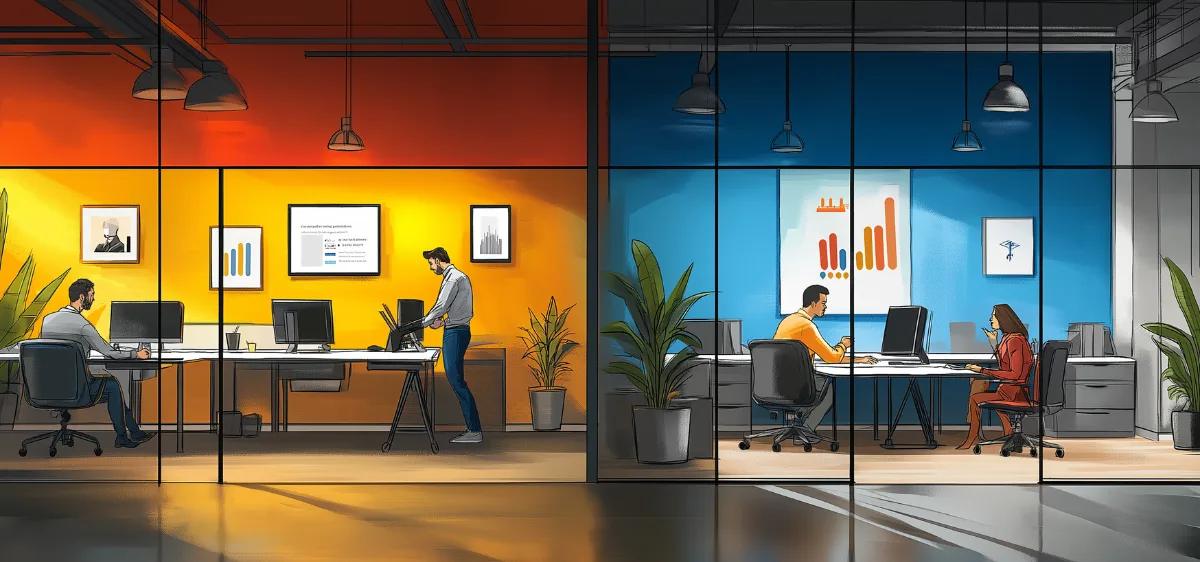
Office Space Design for Managers: Balancing Personalization and Standardization
Table of Contents
A well-designed office defines how a manager thinks, leads, and connects with their team. Too much uniformity can make the space feel impersonal, while excessive customization may disrupt consistency and functionality. The challenge lies in finding the right balance between the two: creating an environment that feels personal yet remains coherent and aligned with organizational needs.
Personalization supports comfort, motivation, and authenticity. Standardization brings cost efficiency, visual cohesion, and long-term maintenance ease. In modern workplace design, this balance directly shapes how managers perform and how teams perceive leadership within their work environment.
In this blog, we will explore how managers and workspace planners can blend personalization and standardization in manager office setups to achieve both practicality and individuality.
Why Personal Space Matters in Manager Office Design
Having personal control over a manager’s office space helps align the environment with their leadership style and daily priorities; this, in turn, supports higher satisfaction and well-being by creating a space that feels comfortable and familiar.
A recent study by Science Direct also indicates that low-privacy, generic work areas are linked to greater emotional exhaustion, while personalized cues can buffer stress by reinforcing identity and control in the workspace. For office space design for managers, these effects translate into steadier focus, clearer decision-making, and a work setting that supports confidence and rapport with teams.
Comfort drives performance when managers can adjust their surroundings to task demands, particularly with lighting that supports visual needs across the day. According to a study, individual control over light levels helps sustain motivation, improves performance on attention-based tasks, and accommodates wide personal preferences, making adjustable task lighting a practical choice in modern workplace design.
High correlated color temperature lighting has also been associated with better mood and productivity outcomes in office settings, which supports flexible lighting strategies in a manager office setup.
Even modest personal control over thermal comfort links to higher workplace satisfaction, reinforcing the case for small-scale, user-adjustable solutions within a standardized shell.
The Power of Standardization in Modern Workplace Design
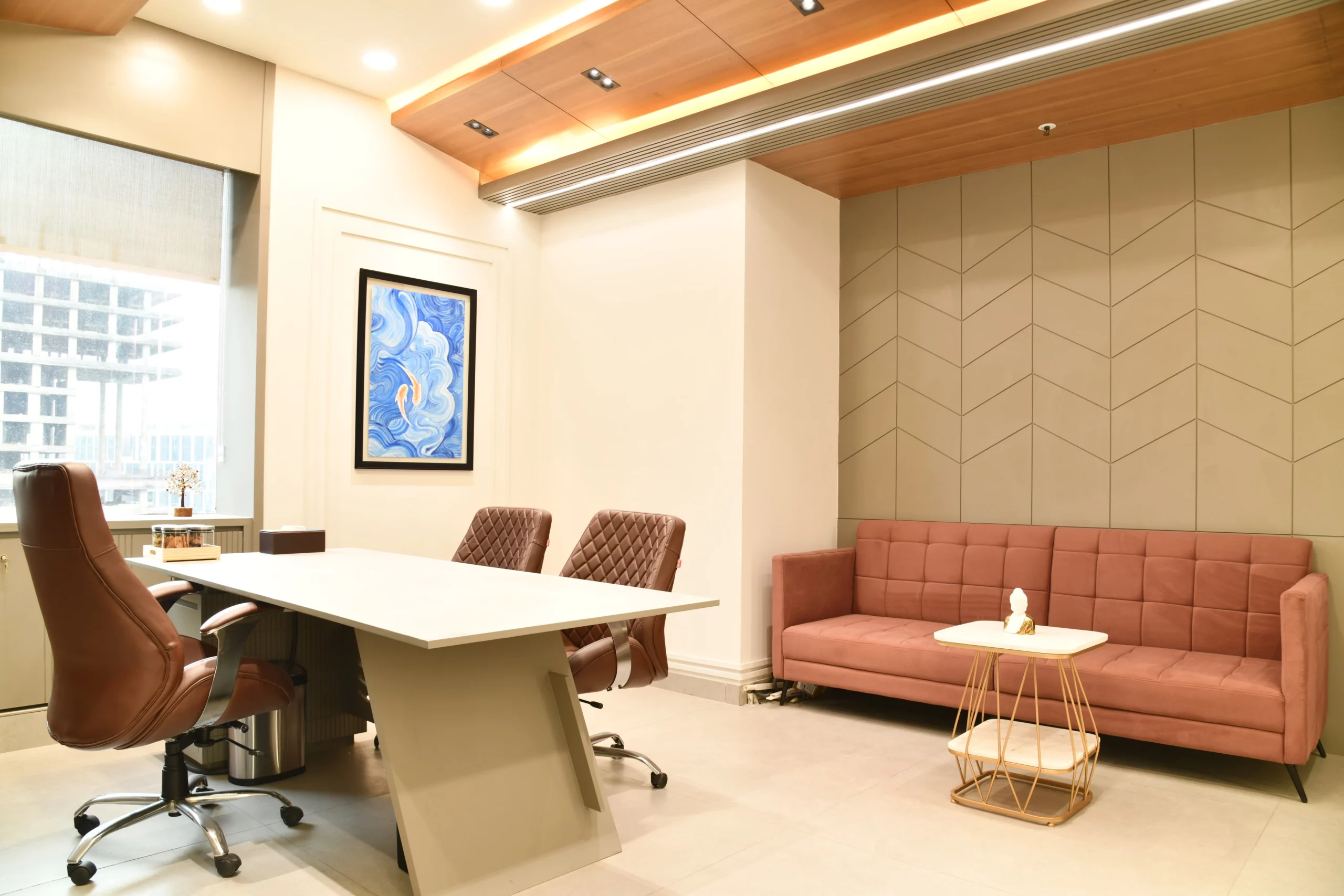
Standardization gives manager office spaces predictable costs, consistent quality, and simpler maintenance across sites, which supports clear budgets and faster fitouts for multi-site teams. Standardized work methods reduce guesswork during moves and refreshes, creating reliable timelines and less downtime in modern workplace design.
Some practical benefits to highlight in office space planning are as follows:
- Common furniture specifications reduce training time and make repairs easier through interchangeable parts across locations.
- Bulk purchasing of unified SKUs lowers procurement costs and simplifies vendor management for recurring fitouts.
- Modular components allow quick reconfiguration for role changes without bespoke work or extended downtime.
- Documented processes and shared playbooks speed coordination between facilities and IT during refresh cycles.
- Consistent layouts, cable management, and lighting levels strengthen brand cues for staff and visitors across sites.
This shell supports office space design for managers by accommodating focus work, quick meetings, and video calls without starting from scratch each time. In hybrid office design, these standards help ensure consistency in service quality while scaling across locations and headcount shifts.
Where the Two Meet: The Hybrid Approach
A balanced method pairs reliable structure with meaningful choice, so comfort increases without losing consistency across sites.
The Standard Shell with Room for Choice
A shared shell gives every manager office setup a familiar base. Modular desks, fixed power and data points, and simple acoustic panels create a repeatable footprint that supports office space planning and quick moves. Within that footprint, personal expression still fits.
Desk orientation can suit sightlines, a privacy screen can clip in, and a swappable décor panel can reflect taste without upsetting brand cues. Limited décor, a plant, or one framed credential adds warmth. This mix keeps Modern workplace design tidy while leaving space for personality.
Tech That Adapts to Individual Managers
Adaptive technology allows spaces to respond to changing tasks without custom rebuilds. Tunable lighting scenes, limited-range local climate control, and ergonomic presets create comfort while keeping maintenance straightforward and consistent across sites in modern workplace design.
Standardized docking, monitor arms, and cable management keep the manager office space tidy and reliable, while profile-based presets in booking systems prepare settings for the next work session.
Setting Personalization Guidelines that Work
Clear, friendly rules keep a personalized office space cohesive across sites. Documented standards outline what stays consistent and where choice fits, which supports office space planning and smooth maintenance cycles.
Here are a few guardrails below, outlining what remains fixed and what can vary:
- Palette and finishes: A primary palette with two or three accent ranges, plus approved finishes for desks, storage, and panels to support a consistent manager office layout.
- Décor and display limits: One framed artwork, one personal photo, one plant within a set height, and a single display shelf to keep clean sightlines in a personalized office space.
- Ergonomics baseline: Chair adjustability ranges, monitor arm height limits, keyboard tray dimensions, and a dimmable task light for consistent comfort in a manager office setup.
- Tech and cable discipline: Universal docks, a single‑cable monitor standard where possible, concealed power strips, labeled ports, and under‑desk trays for tidy use.
- Acoustic and privacy rules: Approved panel heights and placements, door seals where applicable, and pinboard locations that support quiet work without blocking movement.
- Maintenance and safety: Easy‑clean surfaces, shelf weight limits, and a no‑diffuser, no‑open‑flame policy to keep spaces safe and serviceable.
This could help create a manager office layout that stays consistent and easy to maintain, while still allowing room for personalization.
Designing Spaces for Connection and Performance
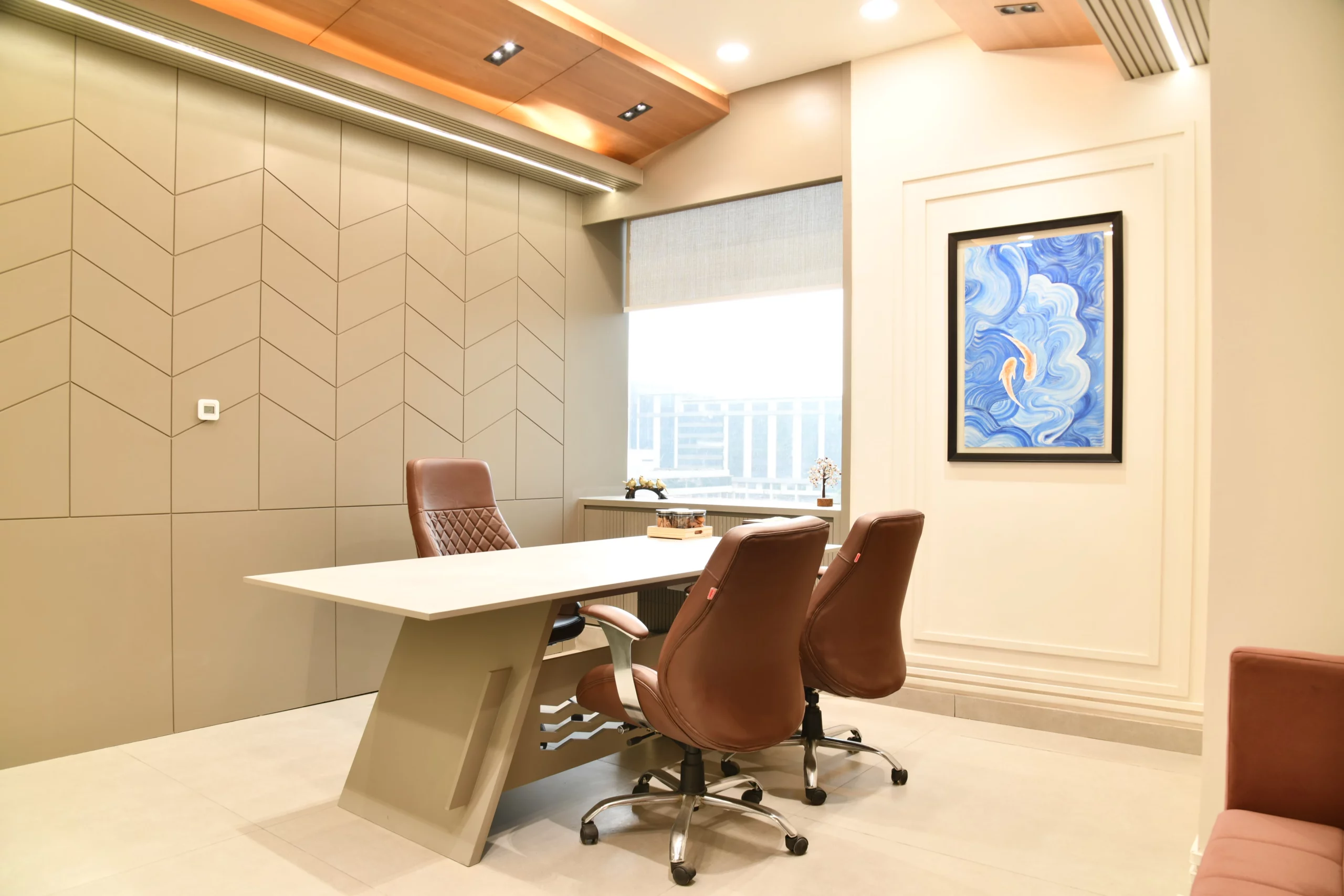
Connection grows when manager office spaces support quick huddles and focused one–to–ones without noise spill. A small round table, a movable screen, and clean camera sightlines keep coaching simple and switching modes easy.
Culture also benefits from the right mix. Private rooms, call booths, and small meeting zones are increasing for good reason; manager offices can borrow these cues to support real conversations without constant interruptions.
Comfort supports sharper decisions. Preset lighting controls ensure clarity in video calls and reduce unnecessary interruptions in work. Local airflow tools raise comfort in warm periods, even as the building maintains a stable baseline. These choices meet personal needs while staying within a shared plan for Modern workplace design.
Bringing It Together: A Balanced Office Concept
A balanced approach aligns individual comfort with shared standards, so a manager office space feels authentic and runs smoothly. Personal expression fits within a clear framework that keeps costs predictable, maintenance simple, and the modern workplace design consistent across sites.
Office space design for managers at Vision Spaces pairs a standard shell with clear lanes for choice, so each manager office space feels personal while the whole site reads as one team. Modular furniture and adaptable technology form the core, and lightweight guidelines keep office space planning smooth across locations.
Schedule a trial today at Vision Spaces to experience adjustable lighting, ergonomic presets, and a personalized office space plan built for managers.
FAQ's
The best manager office space combines a high-function standard layout with personal adjustment options, so the space supports focus, meetings, and video calls.
Personalization helps managers feel a sense of ownership of their environment, which increases satisfaction, comfort, and engagement.
Standardized design ensures cost-efficiency, easier maintenance, and a consistent brand experience across locations. It simplifies procurement, installation, and future reconfiguration while keeping design quality high and predictable.
Companies can deliver a fixed “shell” or kit of parts, then allow personalization within that framework, for example adjustable lighting, décor panels, or storage within defined limits.
Ideas include a task chair with ergonomic presets; a tunable desk lamp or a simple, dimmer lighting; a selected décor wall or acoustic panel that reflects personality; a small plant or photo frame; and a monitor arm and desk layout tailored to individual workflow.